


‘AI & I’: How Stripe is building for an agent-native world
A new episode of AI & I is here. Dan Shipper sits down with Emily Glassberg Sands, head of data and AI at Stripe, to discuss how AI is reshaping online commerce. Dan and Emily discuss how compute is the new cash, fraud has moved beyond the checkout, and agents are starting to act as economic participants on the internet.
Watch on X or YouTube, or listen on Spotify or Apple Podcasts. You can also read the transcript.
Here are the highlights:
- The definition of fraud is expanding: Fraud used to be about payments and stolen credit cards. Now AI companies also have to defend against attackers stealing tokens from free trials, credits, and unpaid compute bills. “Fraud is now a full-funnel problem, not a transaction problem alone,” says Glassberg Sands.
- AI is making fraud easier to execute and detect: Fraudsters now have AI on their side, but so do the companies trying to stop them. AI services also have higher marginal costs than traditional SaaS, so stolen compute can be burned through quickly or resold.
- The internet needs to evolve: Stripe was built for an internet where people browsed, filled out forms, and clicked checkout buttons. Now, humans act through AI interfaces, agents act for them, and software increasingly interacts directly with other software. Every layer of the stack has to adapt to these new behaviors.
- AI growth is still mostly new money: The top AI companies on Stripe are reaching $30 million in annual recurring revenue in about 18 months—roughly three times faster than top SaaS companies from 2018. For now, that growth is largely net new spend rather than cannibalized software budgets, says Glassberg Sands.
- Agents are snapping up commodities: Agentic commerce is real but still in its early stages, and focused on smaller purchases. People are more comfortable letting agents buy low-stakes, easily comparable items like Halloween costumes or school supplies than letting them book a summer trip or order an expensive couch.
Miss an episode? Catch up on Dan’s recent conversations with LinkedIn cofounder Reid Hoffman; the team that built Claude Code, Cat Wu and Boris Cherny; Vercel cofounder Guillermo Rauch; podcaster Dwarkesh Patel; and others, and learn how they use AI to think, create, and relate.
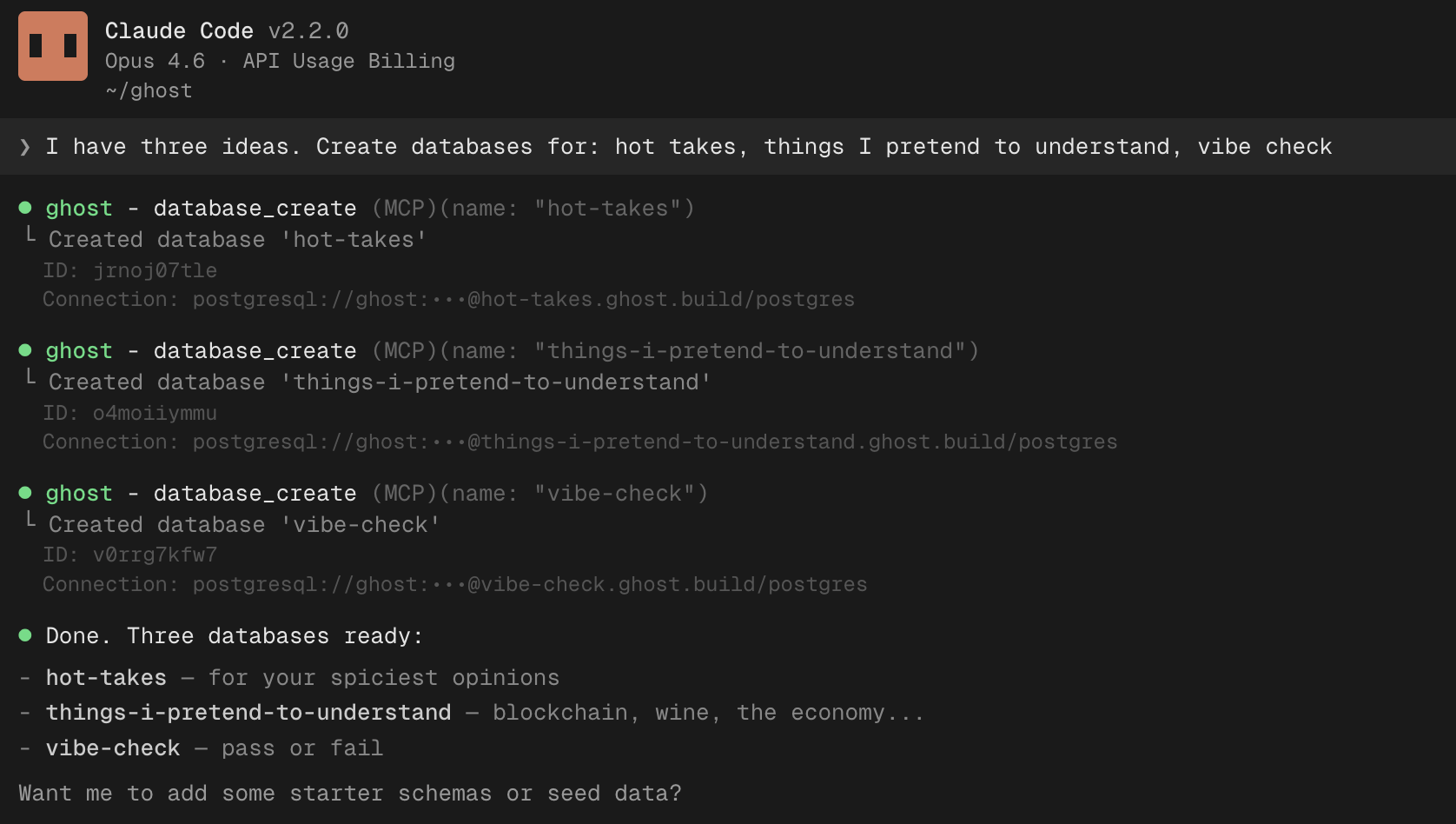
Agents should manage databases
Most postgres providers charge per database. That makes you treat databases like they’re permanent: set up carefully, maintained forever, scrutinized before you spin up another. Ghost makes them ephemeral. The first postgres built for agents to manage the lifecycle of the database. Native MCP lets your agent authenticate, introspect the schema, and run queries without you touching it. Works with Claude Code, Codex, any MCP client. And because pricing is usage-based across all your databases instead of per database, you can spin up 10, 20, 50 for parallel experiments without thinking about it. Free tier: unlimited databases, 1TB storage.
Signal
The fees they are a-changin’
Recent years saw the end of the millennial lifestyle subsidy, which let a generation live off of inordinately cheap Ubers, delivery services, and coworking space—all while venture capital covered the tab. Now the bill’s coming due for AI.
What happened...
Become a paid subscriber to Every to unlock this piece and learn about:
- Why the AI pricing freeride is ending—and your June bill might prove it
- How Dan and Cora general manager Kieran Klaassen use agents all day and couldn’t disagree more on how
- Monologue general manager Naveen Naidu’s workflow to turn customer feedback into a product queue


What is included in a subscription?
Daily insights from AI pioneers + early access to powerful AI tools
 Front-row access to the future of AI
 In-depth reviews of new models on release day
Playbooks and guides for putting AI to work
Prompts and use cases for builders
In-depth reviews of new models on release day
Playbooks and guides for putting AI to work
Prompts and use cases for builders
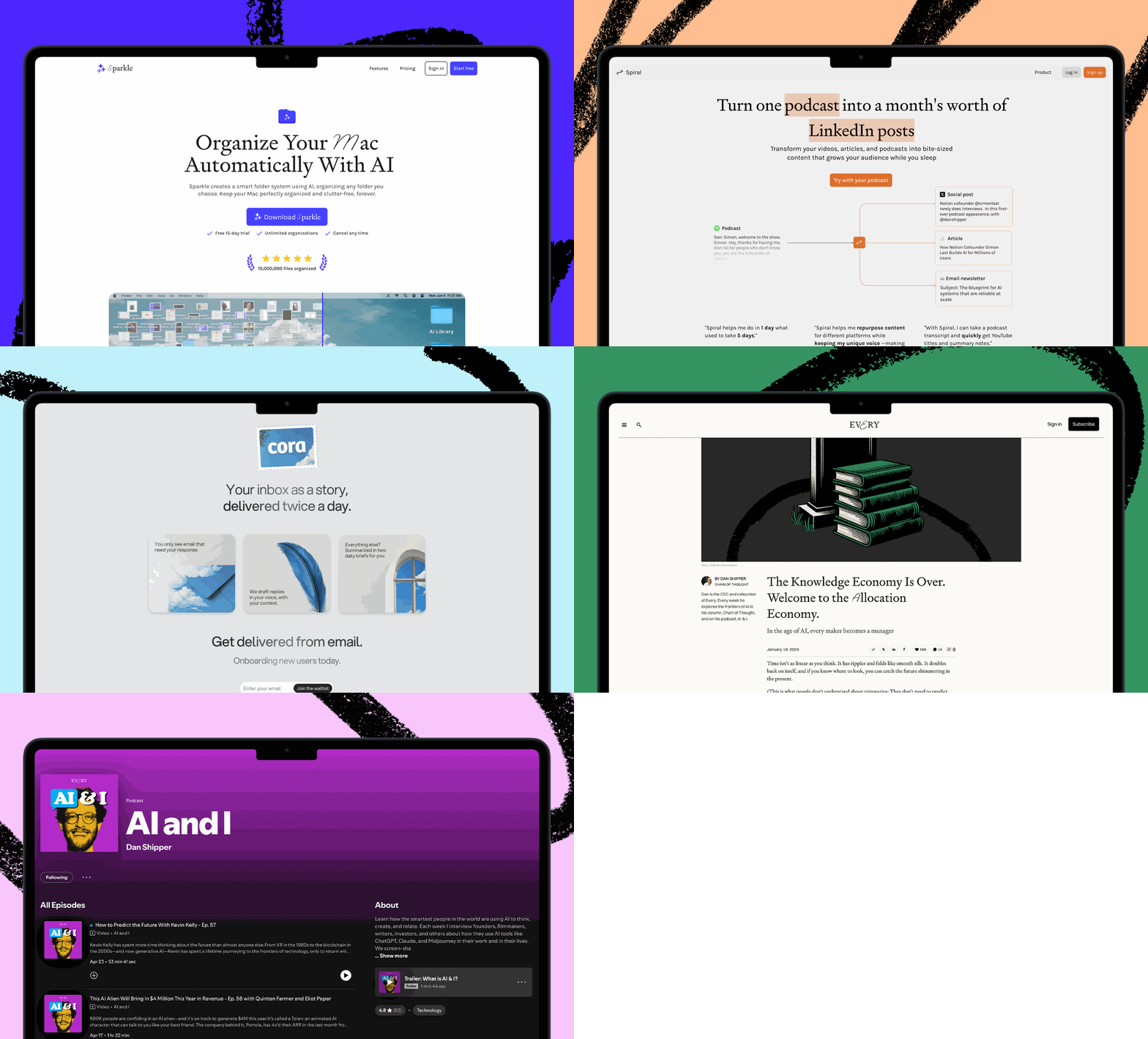
 Bundle of AI software
 Sparkle: Organize your Mac with AI
 Cora: The most human way to do email
 Spiral: Repurpose your content endlessly
 Monologue: Effortless voice dictation for your Mac