


Was this newsletter forwarded to you? Sign up to get it in your inbox.
‘AI & I’: You’re the bread in the AI sandwich
Today, we’re releasing a new episode of our podcast AI & I. Dan Shipper sits down with Kieran Klaassen, GM of Cora and creator of Every’s AI-native engineering methodology, compound engineering. Dan and Kieran discuss where humans fit now that AI can generate high-quality code, copy, strategy, and design. If the execution layer is largely solved, do engineers still have a role in the workplace?
The short answer: Yes. Think of an AI workflow like a sandwich—the model is the workhorse filling, and we’re the bread, providing framing and taste.
Watch on X or YouTube, or listen on Spotify or Apple Podcasts. You can also read the transcript.
Here are the highlights:
- Play to your strengths. Kieran’s compound engineering framework breaks the engineering workflow into four steps: Plan, work, review, and compound. AI takes care of the doing phase. “LLMs are very good at just following steps, doing deep work, working for hours or days, even now,” Kieran says. What’s left for flesh-and-blood humans are the steps before and after—the planning, where you frame the problem, and review, where you determine whether the output feels right (the bread!).
- Humans can identify multiple solutions to the same problem—AI struggles at this. If your knee hurts, you could take Advil, stretch your IT band, or stop running on hard surfaces. Humans are good at diagnosing a problem from many different angles, an exercise agents struggle with, Dan says.
- Taste is the final layer of bread. Once AI has done the work, the most important thing you can do is judge whether the output approaches the vision in your head. Does the output feel right—and if not, how can you reframe the problem until the AI produces something that does? This is what separates art, which has a point of view, from generic slop.
Miss an episode? Catch up on Dan’s recent conversations with LinkedIn cofounder Reid Hoffman; the team that built Claude Code, Cat Wu and Boris Cherny; Vercel cofounder Guillermo Rauch; podcaster Dwarkesh Patel; and others, and learn how they use AI to think, create, and relate.
An AI coworker you can @mention
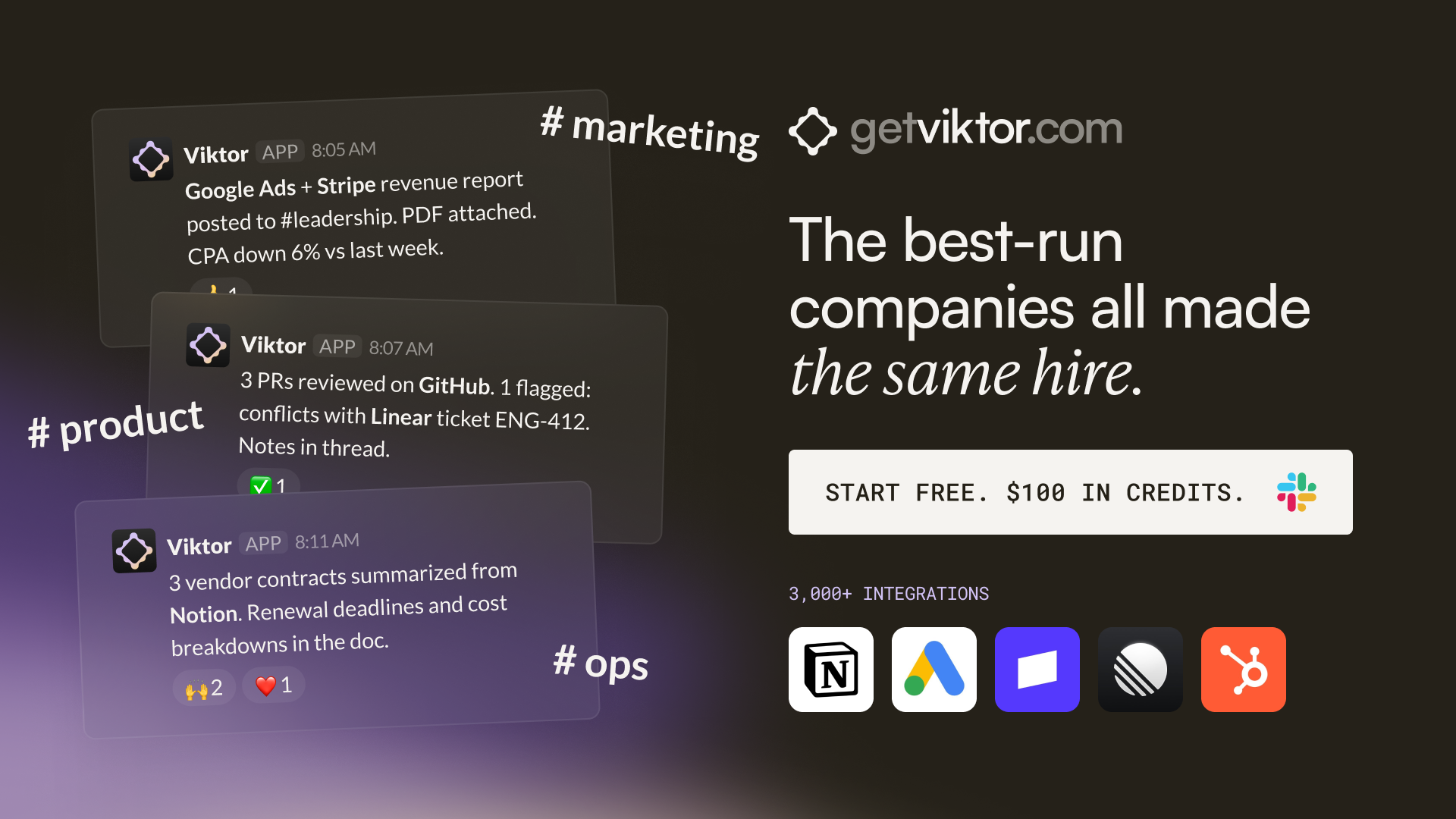
Viktor lives in your Slack, with the rest of the team. It’s connected to Stripe, HubSpot, Linear, GitHub, your ad accounts, and 3,000 other tools your company already uses. Ask Viktor a question and it pulls the data. Ask Viktor to do something and it does it. One message can build a revenue dashboard, reconcile a month of invoices, draft a campaign brief, or open a pull request against a bug report. Give it two weeks and it starts flagging patterns on its own, the kind of thing a sharp teammate would notice by month three. Close to 9,000 teams run Viktor across engineering, ops, marketing, and finance. One colleague, every function.
“Viktor is like Claude, but you can interact with him like with a colleague, not an LLM.”—Tobias Giesen, CEO, Growably
Now, next, nixed
The agents are merging
Now: Claudie is an AI agent that runs on a Mac Mini with a Claude Max account. Since joining Every’s consulting team a few months ago, she’s been promoted multiple times and is now responsible for...
Become a paid subscriber to Every to unlock this piece and learn about:
- Why Every kept giving its AI agent more responsibilities instead of building new agents
- The two ways organizations will structure their AI workforce in the coming years
- Why Every’s consulting team gave its agent a trust battery

What is included in a subscription?
Daily insights from AI pioneers + early access to powerful AI tools
 Front-row access to the future of AI
 In-depth reviews of new models on release day
Playbooks and guides for putting AI to work
Prompts and use cases for builders
In-depth reviews of new models on release day
Playbooks and guides for putting AI to work
Prompts and use cases for builders
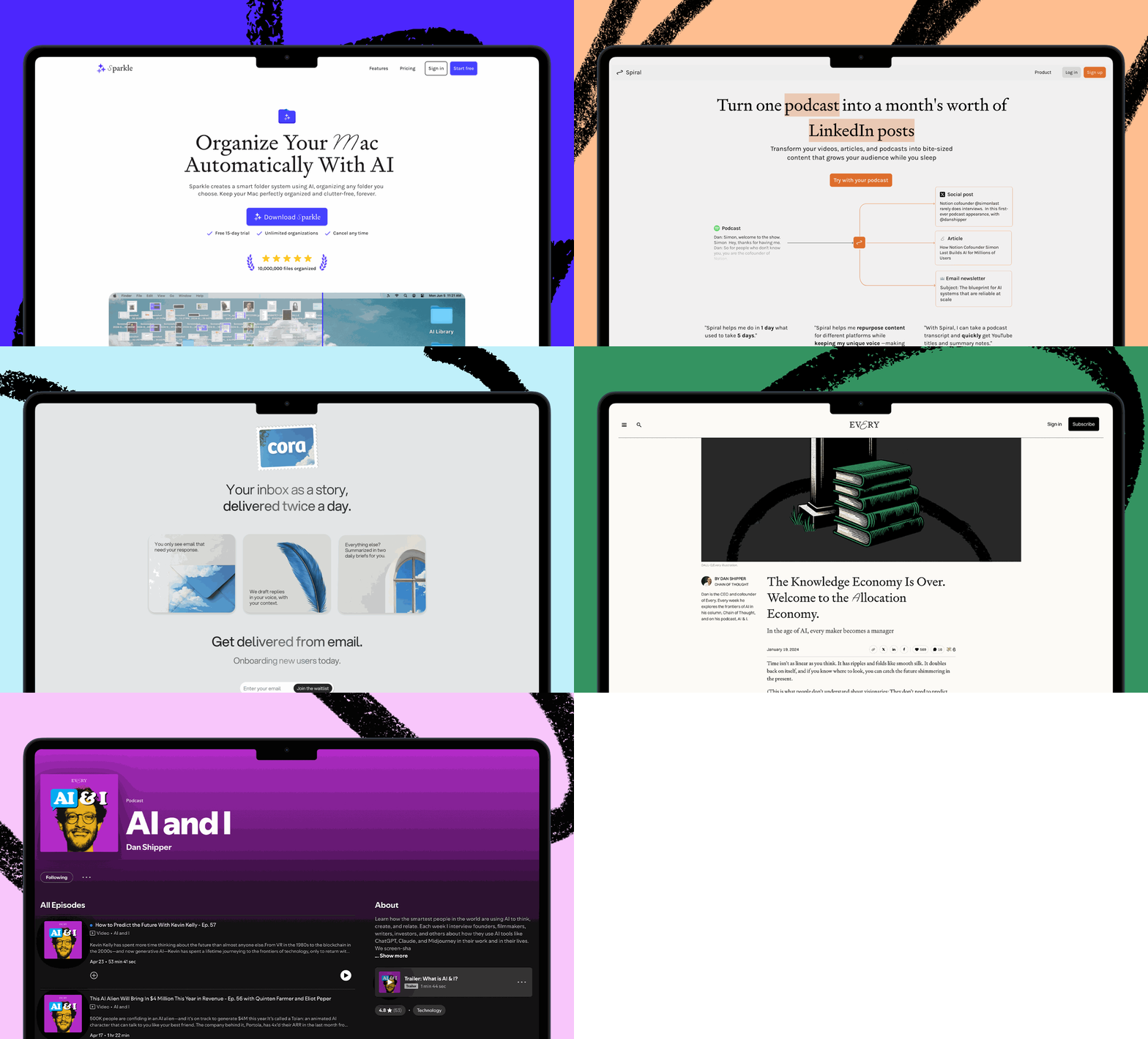
 Bundle of AI software
 Sparkle: Organize your Mac with AI
 Cora: The most human way to do email
 Spiral: Repurpose your content endlessly
 Monologue: Effortless voice dictation for your Mac